

Autoflowering vs Photoperiod Seeds: Complete Comparison Guide (2026)

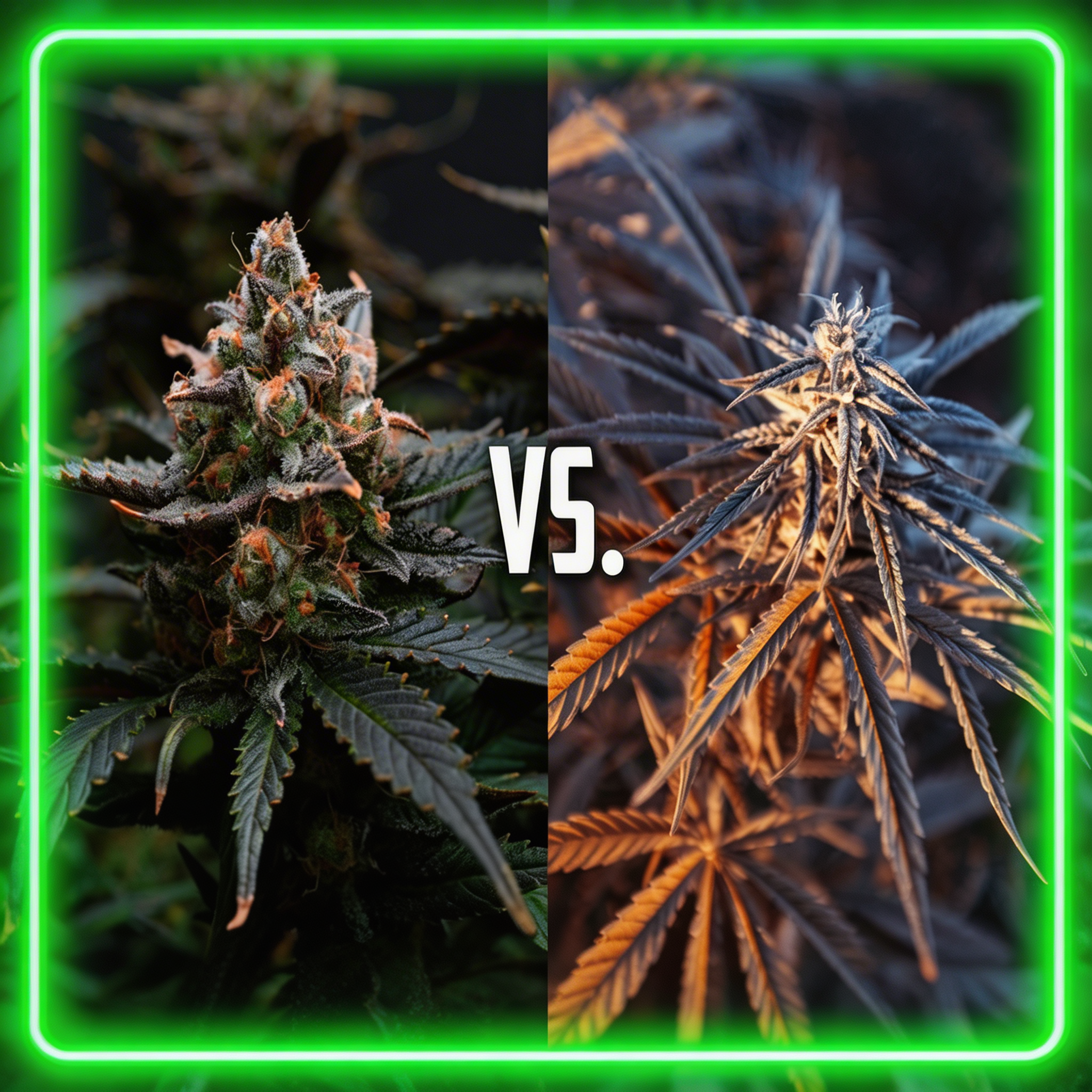
Quick Answer: Autoflowering seeds flower automatically based on age (typically 8–10 weeks from seed to harvest), making them ideal for beginners and fast turnarounds. Photoperiod seeds require a change in light schedule (12/12) to trigger flowering, giving growers more control over plant size and yield. Autoflowers are easier and faster; photoperiods deliver bigger harvests and allow techniques like cloning and extended vegetative growth.
What Are Autoflowering Seeds?
Autoflowering cannabis seeds contain genetics from Cannabis ruderalis, a subspecies that evolved in northern climates with short summers. Unlike traditional cannabis, ruderalis plants flower based on age rather than light cycles. Modern autoflowering strains cross ruderalis genetics with potent indica and sativa varieties, producing plants that are compact, fast, and surprisingly powerful.
Autoflowers typically go from seed to harvest in 8–12 weeks total, regardless of how many hours of light they receive. Most growers run them under 18–20 hours of light throughout the entire lifecycle to maximize photosynthesis and yields.
Key Characteristics of Autoflowering Seeds
- Automatic flowering: No light schedule change needed — plants flower based on age
- Fast lifecycle: Seed to harvest in 8–12 weeks
- Compact size: Typically 60–120 cm (2–4 feet), ideal for small spaces
- Resilient: More resistant to temperature fluctuations, pests, and beginner mistakes
- Multiple harvests per season: Outdoor growers can run 2–3 cycles in one growing season
- Cannot be cloned effectively: Clones inherit the mother’s age and will flower prematurely
What Are Photoperiod Seeds?
Photoperiod cannabis seeds are the traditional type of cannabis seed. These plants rely on changes in the light cycle to transition from vegetative growth to flowering. In nature, this happens as days get shorter in late summer and fall. Indoor growers simulate this by switching from 18/6 (18 hours light, 6 hours dark) to 12/12 (12 hours light, 12 hours dark).
This light-dependent flowering gives growers complete control over when the plant starts producing buds. You can keep a photoperiod plant in vegetative growth for as long as you want — weeks, months, even years — by maintaining long light hours. This makes them perfect for techniques like topping, LST, ScrOG, and mother plant maintenance.
Key Characteristics of Photoperiod Seeds
- Light-dependent flowering: Requires 12/12 light cycle to trigger bloom
- Flexible veg period: Grow plants as large as you want before flipping to flower
- Higher yield potential: Larger plants = more bud sites = bigger harvests
- Cloning-friendly: Take cuttings and maintain genetics indefinitely
- Training-friendly: Extended veg allows advanced techniques (ScrOG, mainlining, super cropping)
- Longer total cycle: Typically 4–8 weeks veg + 8–12 weeks flower = 12–20 weeks total
Autoflowering vs Photoperiod: Side-by-Side Comparison
| Feature | Autoflowering | Photoperiod |
|---|---|---|
| Flowering Trigger | Age-based (automatic) | Light cycle change (12/12) |
| Seed to Harvest | 8–12 weeks | 12–20+ weeks |
| Average Height | 60–120 cm (2–4 ft) | 90–300 cm (3–10 ft) |
| Yield per Plant | 50–200g | 150–600g+ |
| THC Potential | 15–25% | 18–30%+ |
| Light Schedule | 18/6 or 20/4 throughout | 18/6 veg → 12/12 flower |
| Cloning | Not recommended | Yes — easy and effective |
| Training Techniques | LST, gentle topping | All techniques (ScrOG, mainlining, super cropping) |
| Difficulty Level | Beginner-friendly | Intermediate to advanced |
| Outdoor Harvests/Year | 2–3 per season | 1 per season (light dependent) |
| Best For | Beginners, stealth grows, quick harvests | Experienced growers, max yield, breeding |
When Should You Choose Autoflowering Seeds?
Autoflowering seeds are the right choice when speed and simplicity matter most. Here are the scenarios where autos shine:
1. You’re a First-Time Grower
If you’ve never grown cannabis before, autoflowers remove a lot of complexity. You don’t need to worry about light schedules, light leaks, or timing your flip. Just plant, water, feed, and harvest. Strains like Gorilla Glue Auto (20–24% THC) and OG Kush Auto (18–22% THC) deliver impressive potency with minimal effort.
2. You Have Limited Space
Growing in a small closet, balcony, or micro tent? Autoflowers stay compact — most top out at 60–120 cm. You can fit several plants in a 2×2 or 2×4 tent without worrying about height issues during the stretch.
3. You Want Multiple Harvests Per Year (Outdoor)
Outdoor growers in warm climates (like Florida or Southern California) can plant autoflowers every 2–3 months and harvest multiple times per season. While your photoperiod neighbors wait until October for one harvest, you could pull 2–3 harvests of Blue Dream Auto between spring and fall.
4. You Need Discretion
Small plants are easier to hide. Whether you’re growing on a balcony, in a guerrilla spot, or just want to keep things low-profile, autoflowers’ compact stature is a major advantage.
When Should You Choose Photoperiod Seeds?
Photoperiod seeds are the grower’s choice when you want maximum control and maximum yield. Here’s when they make sense:
1. You Want the Biggest Possible Harvest
Photoperiod plants can be grown to enormous sizes with extended vegetative periods. A single Bruce Banner plant with 8 weeks of veg and proper training can easily yield 400–600g. That’s potentially 2–3x what an autoflower produces.
2. You Want to Clone and Maintain Genetics
Found the perfect phenotype? With photoperiods, you can take cuttings and maintain that exact genetic expression indefinitely. Autoflowers can’t be cloned effectively because clones inherit the mother’s age clock.
3. You’re an Experienced Grower Who Loves Training
Advanced techniques like ScrOG (Screen of Green), mainlining, and super cropping require time during the vegetative phase. Photoperiods give you unlimited veg time to shape your canopy exactly how you want it. Gelato and Wedding Cake respond exceptionally well to ScrOG techniques.
4. You’re Growing for Hash or Rosin
Photoperiod strains tend to produce more trichomes and larger buds, making them preferred for extraction. Miami Seeds’ Resin Rush Collection features genetics specifically bred for extreme resin production — ideal for hash and rosin makers.
5. You Want Maximum THC and Terpene Expression
While modern autoflowers have closed the gap significantly, photoperiod strains still hold the edge in raw potency and terpene complexity. Strains like Bruce Banner (22–26% THC) and Chemdawg (18–22% THC) are legendary for their potency and complex flavor profiles.
What About Fast-Flowering Seeds?
There’s actually a third option that combines elements of both: fast-flowering (fast version) seeds. These are photoperiod-autoflower hybrids that still require a 12/12 light change to flower, but they complete the flowering phase 1–2 weeks faster than standard photoperiods.
Fast-flowering seeds are an excellent middle ground for growers who want photoperiod-level quality with a shorter wait. Miami Seeds offers several fast-flowering options:
- Candyland Fast — Sativa-dominant, sweet and earthy, flowers in just 6 weeks, up to 500 g/m²
- Durban Poison Fast — Pure Sativa, energetic and uplifting, 6–7 weeks flowering, ~450 g/m²
- Lemon Kush Fast — Hybrid, refreshing citrus lemon aroma, 6–7 weeks flowering, up to 450 g/m²
- Pineapple Express Fast — Sativa-dominant hybrid, tropical pineapple flavor, 6–7 weeks flowering, up to 550 g/m²
Can You Grow Autoflowers and Photoperiods Together?
Yes — but with important considerations. Since autoflowers don’t depend on light schedule, you can technically grow them in the same space as photoperiod plants. However, there are trade-offs:
During vegetative phase (18/6): Both types thrive. Autoflowers will start flowering on their own while photoperiods continue to veg. This actually works well — by the time your autos are harvested, your photoperiods are nicely sized for their flip.
During flowering phase (12/12): Autoflowers will still grow and flower under 12/12, but they won’t reach their full potential since they benefit from more light hours. You’ll see reduced yields compared to running them at 18/6 or 20/4.
Best strategy: Run autoflowers as a “quick harvest” while your photoperiods veg, then give the full tent to photoperiods when you flip to 12/12.
Autoflower Myths Debunked
Myth: “Autoflowers are weak and low-THC”
Reality: This was true 10 years ago. Modern autoflowers routinely hit 20–25% THC. Gorilla Glue Auto from Miami Seeds tests at 20–24% THC — comparable to many photoperiod strains.
Myth: “You can’t train autoflowers”
Reality: You absolutely can — just use low-stress techniques. LST (Low Stress Training) works great on autoflowers. Avoid high-stress techniques like heavy topping or super cropping, as autos don’t have time to recover.
Myth: “Autoflowers don’t yield enough to be worth it”
Reality: While individual plant yield is lower, the math changes when you consider speed. Three autoflower harvests per year can outproduce one large photoperiod harvest, especially for outdoor growers.
Myth: “Autoflowers don’t need nutrients”
Reality: They absolutely need nutrients — just gentler doses. Start at 50% of what you’d give a photoperiod and increase gradually. Autoflowers are more sensitive to overfeeding due to their shorter lifecycle.
Choosing the Right Type for Your Climate
Hot Climates (Florida, Southern US, Tropical)
Both types work well, but autoflowers have an edge because they finish before the worst of summer heat and humidity. This reduces the risk of mold and bud rot during late-season harvests. For outdoor Florida grows, autoflowers like Sour Diesel Auto can complete their cycle before hurricane season peaks.
Cool Climates (Northern US, UK, Northern Europe)
Autoflowers are almost essential for outdoor growers in northern latitudes. Short summers mean photoperiod plants often can’t finish flowering before frost arrives. Autoflowers’ fast lifecycle lets you plant in May and harvest by July/August.
Indoor (Any Climate)
Both types perform excellently indoors. Your choice depends on your goals: speed (autoflower) or maximum yield per cycle (photoperiod). Many indoor growers run a perpetual harvest with autoflowers — starting new plants every 3–4 weeks for continuous production.
Cost Comparison: Growing Autoflowers vs Photoperiods
| Cost Factor | Autoflowering | Photoperiod |
|---|---|---|
| Electricity (per cycle) | Lower — shorter cycle despite more daily light hours | Higher — longer total grow time |
| Seed Cost | Need new seeds each cycle (can’t clone) | Buy once, clone indefinitely |
| Nutrients | Less total nutrients used | More nutrients over longer cycle |
| Yield per Watt | 0.5–1g per watt | 1–1.5g per watt |
| Cost per Gram | Moderate — faster cycles offset lower yield | Lower — higher yield per cycle reduces cost |
Recommended Seeds from Miami Seeds
Best Autoflowering Seeds
- Gorilla Glue Auto — 20–24% THC, indica-dominant, pungent and earthy, 8–9 weeks. The gold standard for potent autoflowers.
- Blue Dream Auto — 18–22% THC, balanced hybrid, fruity berry aroma, 9–10 weeks. A smooth, uplifting classic.
- Sour Diesel Auto — 20–24% THC, sativa-dominant, pungent diesel, 10–11 weeks. Creative and energizing.
- OG Kush Auto — 18–22% THC, indica-dominant, earthy and citrusy, 7–8 weeks. Quick and classic.
- Blue Cheese Auto — 16–20% THC, indica-dominant, pungent and cheesy, 8–9 weeks. Relaxing and flavorful.
Best Photoperiod Seeds
- Bruce Banner — 22–26% THC, hybrid, pungent diesel, 9–10 weeks flower. One of the strongest strains available.
- Gelato — 18–22% THC, hybrid, sweet and citrusy, 8–9 weeks flower. Smooth and euphoric.
- Chemdawg — 18–22% THC, balanced hybrid, earthy and spicy, 9–10 weeks flower. A legendary strain.
- Wedding Cake — 20–23% THC, hybrid, sweet vanilla, 8–9 weeks flower. Rich flavor and powerful effects.
- Granddaddy Purple — 18–22% THC, indica-dominant, sweet and fruity, 8–9 weeks flower. The ultimate relaxation strain.
Best Fast-Flowering Seeds (The Middle Ground)
- Pineapple Express Fast — Sativa-dominant, tropical pineapple, 6–7 weeks flower, up to 550 g/m²
- Candyland Fast — Sativa-dominant, sweet and earthy, 6 weeks flower, up to 500 g/m²
Frequently Asked Questions
Are autoflowering seeds good for beginners?
Yes, autoflowering seeds are the best choice for beginners. They don’t require light schedule management, they’re more forgiving of mistakes, and they deliver results in just 8–12 weeks. Start with a resilient strain like Gorilla Glue Auto or OG Kush Auto for your first grow.
Do autoflowering seeds yield less than photoperiod seeds?
Per plant, yes — autoflowers typically yield 50–200g compared to 150–600g+ for photoperiods. However, autoflowers’ faster lifecycle means you can run more cycles per year. Three autoflower harvests can match or exceed one large photoperiod harvest in total annual yield.
Can you clone autoflowering plants?
Technically yes, but it’s not practical. Autoflower clones inherit the mother plant’s age, meaning they’ll flower at the same time regardless of size. The clone won’t have time to develop properly, resulting in tiny plants with minimal yield. If you want to preserve genetics, choose photoperiod seeds instead.
What is the best light schedule for autoflowering seeds?
Most growers use 18/6 (18 hours light, 6 hours dark) or 20/4 throughout the entire lifecycle. Some growers run 24/0 (continuous light), but plants generally benefit from at least a few hours of darkness for rest and metabolic processes. 18/6 offers a good balance of light exposure and electricity savings.
Are autoflower seeds less potent than photoperiod seeds?
Not anymore. A decade ago, autoflowers were noticeably weaker. Modern breeding has closed this gap dramatically. Today’s top autoflowers regularly test at 20–25% THC, which rivals many photoperiod strains. The difference in potency is now negligible for most varieties.
Can you top autoflowering plants?
You can, but with caution. Light topping early in the vegetative stage (around day 14–21) can work well if the plant is healthy and growing vigorously. However, heavy topping or topping a stressed plant can reduce yields since autoflowers have a fixed timeline to recover. LST (Low Stress Training) is generally safer and just as effective for autoflowers.
Which type produces better-tasting buds?
Photoperiod strains traditionally have more complex terpene profiles because they have longer to develop resin and flavors. However, modern autoflower genetics have improved significantly. The flavor gap is closing, though connoisseurs may still prefer photoperiod versions of the same strain for maximum terpene expression.
The Verdict: Which Should You Grow?
There’s no universally “better” option — it depends entirely on your situation:
- Choose autoflowers if: You’re new to growing, have limited space, want fast results, or grow outdoors in challenging climates
- Choose photoperiods if: You want maximum yield, love plant training, need cloning capability, or grow for extractions
- Choose fast-flowering if: You want photoperiod-quality buds with a reduced flowering time
Many experienced growers use both — autoflowers for quick personal harvests and photoperiods for their main production runs. There’s no rule that says you have to pick one.
Ready to start growing? Browse Miami Seeds’ autoflowering collection and photoperiod collection to find the perfect seeds for your next grow.